
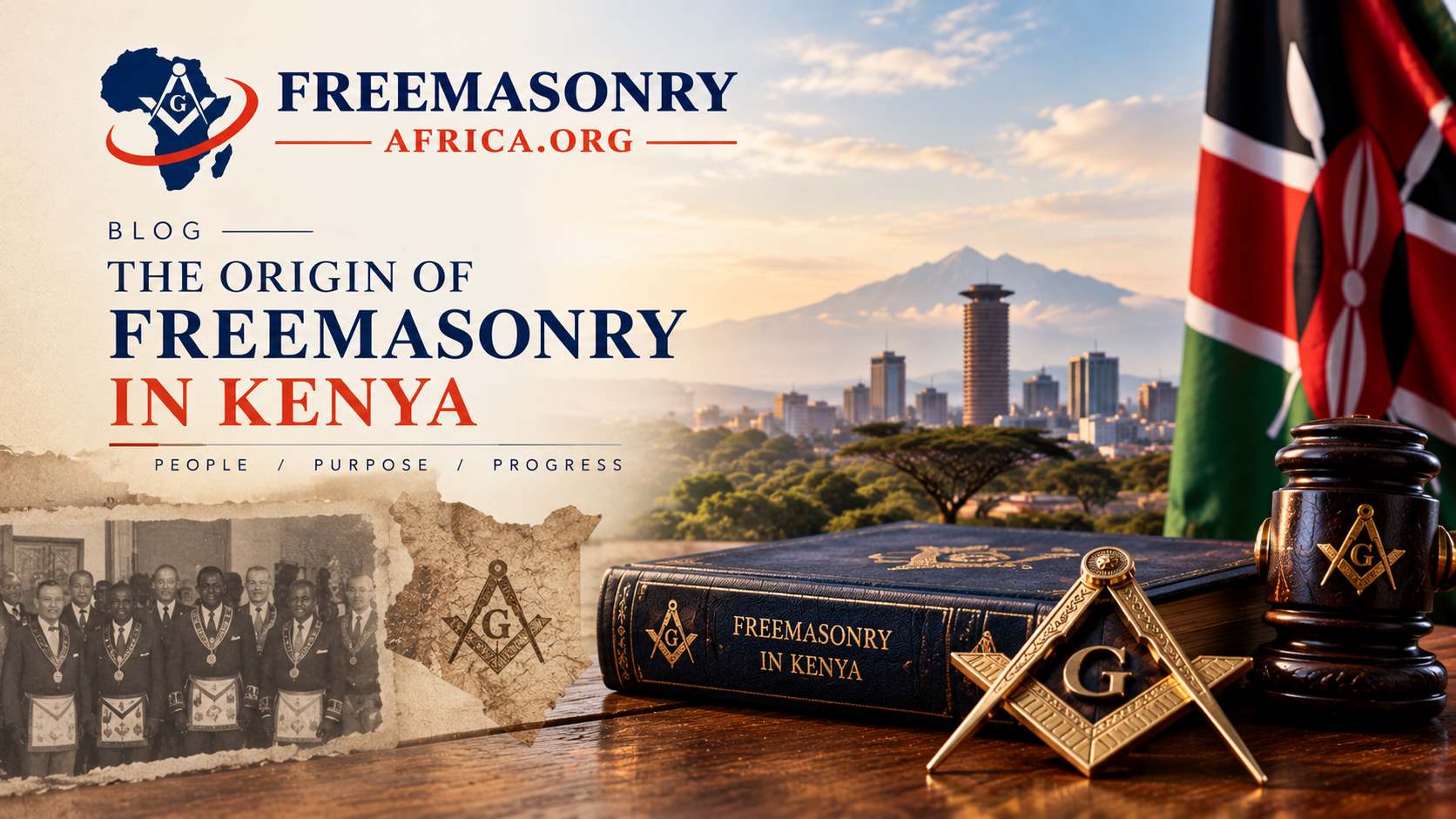
Freemasonry in Kenya: A Tradition with More Than a Century of History
The story of Freemasonry in Kenya stretches back more than a century, connecting the development of early Masonic Lodges with the growth of Nairobi, Mombasa, the railway, and other centres of East African life.
Today, Masonic activity in Kenya forms part of a wider East African Masonic tradition, with Lodges operating in different parts of the country and participating in a range of ceremonial, educational, charitable, and social activities.
To understand Freemasonry in Kenya, it helps to look beyond the symbols and ceremonies and explore the people, places, and history that shaped its development.
The Early Roots of Freemasonry in Kenya
The beginnings of organised Freemasonry in what is now Kenya are closely connected with the development of British East Africa and the Uganda Railway.
The railway reached Nairobi on 30 May 1899, and railway officials and other early settlers included Freemasons who became interested in establishing a Lodge in the growing settlement.
The First Nairobi Lodge
In 1900, a group of Masons in Nairobi discussed the possibility of forming a Lodge and communicated with the United Grand Lodge of England.
After further efforts and a formal petition, a warrant was issued for Lodge Harmony on 10 January 1905. The Lodge was subsequently consecrated on 1 May 1905.
Lodge Harmony became an important starting point in the development of organised Craft Freemasonry in Kenya.
Freemasonry and the Growth of Nairobi
The development of Freemasonry in Nairobi followed the rapid growth of the city itself.
What began as a railway settlement became an administrative and commercial centre. As Nairobi developed, so did its professional, social, and institutional communities.
Masonic Lodges became part of this wider development.
New Lodges in Nairobi
Lodge Harmony was followed by other Lodges as the Masonic community expanded.
Among the early examples were Victoria Nyanza Lodge, consecrated in 1911, Orient Lodge, consecrated in 1914, and Progress Lodge, consecrated later that same year.
The growth of these Lodges reflects the increasing organisation of Masonic activity in the country during the early twentieth century.
Freemasonry Beyond Nairobi
Masonic activity did not remain confined to the capital.
As towns and commercial centres developed, Lodges were established in different parts of Kenya.
Freemasonry in Mombasa
Mombasa has a particularly interesting place in the history of East African Freemasonry because of its position as a major coastal and trading centre.
Mombasa Lodge No. 3645 was consecrated on 31 May 1913.
Its history forms part of the wider development of Freemasonry along the East African coast.
Freemasonry in Nakuru
Nakuru also became an important location for Masonic activity.
Lodge Menengai No. 3559 was consecrated in Nakuru on 27 January 1912.
The presence of Lodges outside Nairobi illustrates how Masonic organisation developed alongside Kenya's expanding network of towns and settlements.
Freemasonry Around Mount Kenya and the Rift Valley
Over subsequent decades, additional Lodges appeared in places including Nyeri, Naivasha, Eldoret, Kericho, Kisumu, and other areas.
Current East African Masonic listings include Lodges such as Mount Kenya Lodge, Rift Valley Lodge, Nandi Border Lodge, Lake Lodge, Mau Forest Lodge, and Equator Lodge.
The East African Masonic Connection
Kenya's Masonic history cannot be separated entirely from the history of neighbouring East African countries.
Lodges developed in Uganda, Tanganyika and Zanzibar alongside those in Kenya, creating a broader regional Masonic network.
The District Grand Lodge of East Africa now covers Kenya, Uganda, Tanzania, and Seychelles under the United Grand Lodge of England.
Zanzibar and the Beginning of East African Freemasonry
Before the establishment of the first Nairobi Lodge, Masonic activity had already developed in Zanzibar.
The first Lodge in the East African region under the English constitution was established there in 1904.
This makes Zanzibar an important part of the wider history behind Freemasonry in Kenya and East Africa.
What Happens in a Kenyan Masonic Lodge?
A Lodge is more than a physical meeting place.
It is where members gather for formal meetings, ceremonial work, education, administration, fellowship, and other activities according to the rules of their jurisdiction.
Masonic Ceremonies
Ceremony is an important part of Craft Freemasonry.
The traditional degrees use symbolism and allegory to explore themes connected with character, responsibility, morality, and personal development.
Masonic Education
Learning continues beyond the ceremonies.
Members may study Masonic history, symbolism, philosophy, traditions, architecture, leadership, or subjects connected with their particular Lodge and jurisdiction.
A Lodge is not simply a place where meetings are held. It is also a setting for learning, fellowship, reflection, and participation.
Masonic Lodges and Community Life
The history of individual Lodges is also connected to the communities in which they operate.
Members come from different professional and personal backgrounds, and their involvement in wider society continues outside the Lodge.
Charity and Service
Charitable activity is an established part of Masonic tradition.
Depending on the Lodge and organisation, this can involve fundraising, community support, educational assistance, welfare initiatives, or contributions to charitable causes.
The nature of such work varies between organisations, so individual projects should be considered on their own terms.
Freemasonry and Kenyan Identity
Kenya's Masonic history began within a very different political and social environment from the country that exists today.
This makes the subject particularly interesting for anyone studying the history of voluntary organisations in Kenya.
Over more than a century, Masonic Lodges have existed alongside major changes in the country's political, economic, cultural, and social life.
From Colonial-Era Lodges to Modern Kenya
The earliest Lodges were established during the colonial period, when many of their members were associated with British administration, railway development, commerce, and other expatriate communities.
The history after independence is a separate and important chapter in understanding how Masonic organisations continued to operate within modern Kenya.
It is therefore useful to distinguish the historical origins of an institution from the way its members and Lodges function in contemporary society.
How Many Lodges Are There in Kenya?
The number of Lodges associated with a particular Masonic jurisdiction can change over time, and different Masonic organisations may maintain separate structures.
Our East African Masonic directory lists numerous Lodges in Kenya, including Lodges in Nairobi, Mombasa, Kisumu, Nakuru, Nyeri, Eldoret, Naivasha, Ruiru, Kericho, and other locations.
This illustrates that Masonic activity in Kenya extends well beyond Nairobi.
Some Historic Kenyan Lodge Names
The names of older Lodges provide an interesting window into the history of Masonic organisation in the country.
Examples include:
- Lodge Harmony No. 3084
- Victoria Nyanza Lodge No. 3492
- Lodge Menengai No. 3559
- Mombasa Lodge No. 3645
- Orient Lodge No. 3703
- Progress Lodge No. 3727
- Donyo Sabuk Lodge No. 4070
- Equator Lodge No. 4337
- Mount Kenya Lodge No. 5638
- Lodge of Nairobi No. 7187
These names also reflect Kenya's geography and the historical places with which the Lodges became associated.
Why Masonic History Matters
Studying Freemasonry in Kenya is not only about understanding an organisation.
It provides another perspective on the history of Nairobi, Mombasa, the railway, professional communities, voluntary associations, and the development of East African institutions.
Historical research also helps separate documented events from the many myths and assumptions that have developed around Freemasonry.
The further back we look, the more important it becomes to distinguish historical records from stories that have simply been repeated over time.
Freemasonry in Kenya Today
Modern Masonic life in Kenya continues within established Lodge structures.
Meetings, ceremonies, education, fellowship, charitable activities, and Lodge administration remain important aspects of participation.
The wider East African Masonic structure also continues to connect Lodges across Kenya, Uganda, Tanzania, and Seychelles.
A Living Tradition
More than a century after the first Nairobi Lodge was established, Freemasonry remains part of Kenya's wider history of organised fraternal life.
Its story has moved from the early railway era through the development of towns and cities to the modern period.
Understanding that history provides a more balanced picture of what Freemasonry in Kenya is, where it came from, and how its traditions have continued to develop.
Frequently Asked Questions
When did Freemasonry begin in Kenya?
Organised Freemasonry in Kenya dates to the early twentieth century. Lodge Harmony received its warrant on 10 January 1905 and was consecrated in Nairobi on 1 May 1905.
What was the first Masonic Lodge in Kenya?
Lodge Harmony is generally identified as the first Lodge established in the territory that became Kenya under the United Grand Lodge of England.
Was there Freemasonry in East Africa before Kenya?
Yes. A Lodge was established in Zanzibar in 1904, before Lodge Harmony was warranted in Nairobi.
Are there Masonic Lodges outside Nairobi?
Yes. Historical and current listings show Lodges in locations including Mombasa, Nakuru, Kisumu, Nyeri, Eldoret, Naivasha, Kericho, Ruiru, and other parts of Kenya.
Is Freemasonry in Kenya connected with other East African countries?
Yes. The District Grand Lodge of East Africa covers Kenya, Uganda, Tanzania, and Seychelles under the United Grand Lodge of England.
Exploring the History Further
The history of Freemasonry in Kenya is a story of Lodges, people, places, traditions, and changing communities.
From the arrival of the railway in Nairobi to the establishment of Lodges across the country, its development forms part of the wider history of East Africa.
For anyone interested in Kenya's Masonic heritage, exploring individual Lodges can be particularly rewarding because each Lodge has its own foundation, members, traditions, and place in the history of the region.
